Go to product information
1 of 2

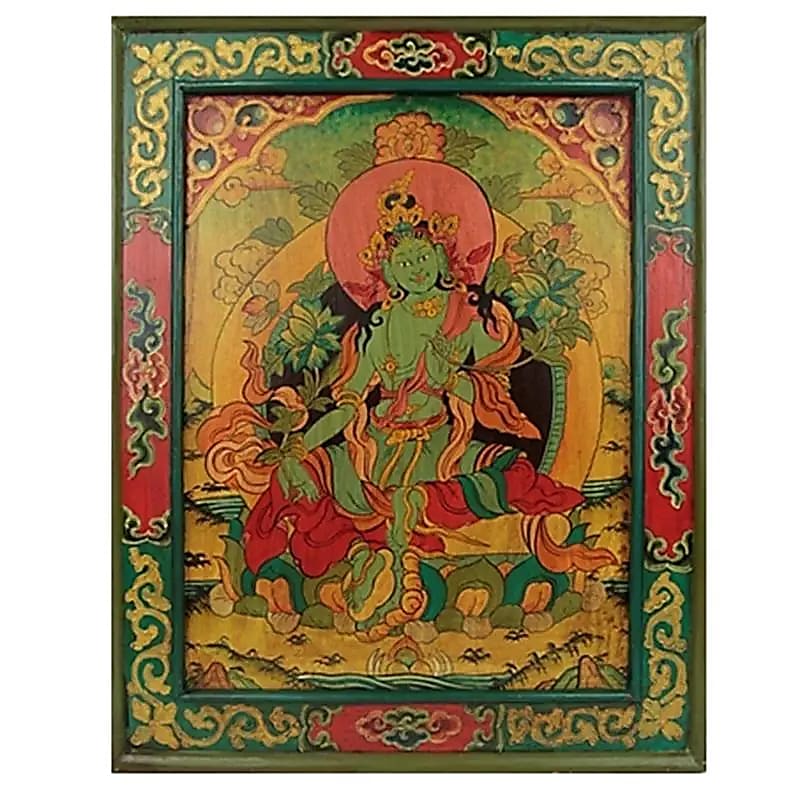
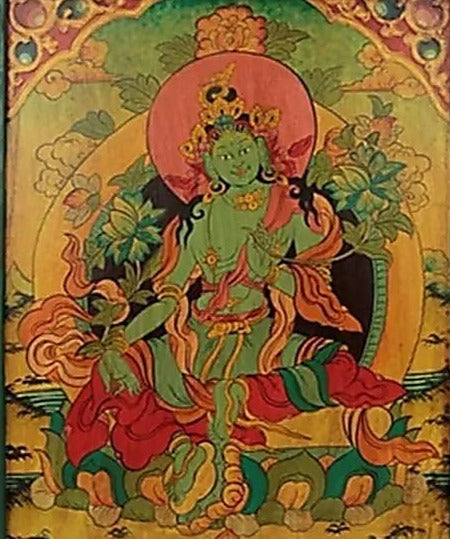
Thangka (sacred painted wood panel) of GREEN TARA measuring 66 x 52 centimeters, incredible design in a pine wood frame, carefully hand-painted in beautiful shimmering colors!

Thangka (sacred painted wood panel) of GREEN TARA measuring 66 x 52 centimeters, incredible design in a pine wood frame, carefully hand-painted in beautiful shimmering colors!

Regular price €197,70 EUR
Regular price Promotional price €197,70 EUR
Promotion Out of stock
Taxes included. Shipping fees calculated at the checkout step.

✓ Request the link to order and receive this item via Vinted (available in 26 countries – reduced shipping costs) → Send an email

    About the product:

    🛕 Name/ Type: Printed Thangka of Green Tara - Luxurious design and finish in a pine wood frame, with five (different) Buddhas, carefully hand-painted in beautiful colors.

    🌍 Origin: Nepal

    📐 ⚖️ Dimensions: ± 66 x 52 centimeters

    ⚖️ Weight: ± 2700 grams

    🧬 Material: Wood

    📦 Packaging: Individually - Wrapped in paper

    🎁 Ideal for gifting or treating yourself!


    🌟 Stories and Symbols

    Thangkas are Tibetan Buddhist religious paintings, made on canvas or silk, serving as supports for meditation, teaching, and devotion. Their history is inseparable from that of Tibetan Buddhism, traversing centuries and trials, including periods of repression when religious practice was forbidden or dangerous.


    📜 Origins and Influences (7th–12th centuries)

    • 7th century: Buddhism is introduced to Tibet by King Songtsen Gampo, notably through the Nepalese wife Bhrikuti and the Chinese princess Wencheng. This period marks the beginning of the spread of Buddhist arts, including religious paintings.
    • 8th century: The Indian master Padmasambhava (Guru Rinpoche) and the pandit Śāntarakṣita establish tantric Buddhism in Tibet. The first Tibetan Buddhist paintings appear, influenced by Indian and Nepalese traditions.
    • 11th–12th centuries: The earliest known thangkas date from this period, illustrating cultural exchanges between Tibet, India, and Nepal. These works serve as teaching aids for practitioners, often illiterate, by depicting scenes from the life of the Buddha, bodhisattvas, and mandalas.

    🛡️ Thangkas as Means of Preservation (13th–19th centuries)

    • 13th–14th centuries: Under the reign of Tibetan kings, thangkas become objects of devotion and teaching. Tibetan artists develop their own style, blending Indian, Nepalese, and Chinese influences.
    • 16th–17th centuries: Thangkas are used in monasteries for meditation and rituals. They depict deities, spiritual masters, and Buddhist teachings.
    • 18th–19th centuries: Thangkas continue to evolve, reflecting the political and religious changes in Tibet. They serve both as supports for meditation and as means of preserving the Buddhist tradition in the face of external challenges.


    🧭 Thangkas as Symbols of Resistance (20th century)

    • 1950: The Chinese invasion of Tibet leads to the destruction of many monasteries and the persecution of Buddhist practitioners. Thangkas, as religious representations, are threatened.
    • 1959: The exile of the Dalai Lama and thousands of Tibetans marks a turning point. Thangkas become symbols of cultural and spiritual resistance. Tibetan artists in exile, particularly in India, preserve and transmit this sacred art.
    • Today: Thangkas continue to be created and studied, both in Tibet and outside. They are recognized as an intangible cultural heritage, testifying to the resilience and richness of Tibetan Buddhism.


    🎨 Artistic and Spiritual Characteristics

    • Iconography: Each thangka follows precise rules for representing deities, with specific proportions and attributes.
    • Symbolism: Colors, shapes, and patterns have deep meanings, related to Buddhist teachings.
    • Function: Thangkas serve as supports for meditation, teaching, and devotion. They are used during rituals, ceremonies, and spiritual practices.


    🕊️ Conclusion

    Thangkas are much more than mere works of art. They embody the history, spirituality, and resilience of the Tibetan people.

    Through the centuries, they have endured trials, testifying to the strength of the Tibetan Buddhist tradition in the face of adversity.

    Even today, they continue to inspire and guide practitioners while preserving a precious cultural heritage.

      A question? A comment? | Order and delivery information

      📞 Customer service at your disposal from Tuesday to Saturday, from 10 AM to 7 PM (French time)
      🇫🇷 From France: 06 51 85 38 18
      🌍 From international: +33 6 51 85 38 18
      💬 Live chat: via the bubble at the bottom right of your screen
      📧 Email : available 24/7 – we respond quickly!
      🔖 Order today and receive your package within 2 to 10 days depending on your continent.
      💳 Secure & certified payment via SSL encryption 🔐. No payment information is stored on our site: everything is processed directly by our certified partners.

      ↩️ Returns & exchanges possible within 14 to 30 days after receipt.

      🌍 Shipping costs automatically calculated based on your shipping address at checkout.

      📦 Shipping country: France 🇫🇷
      🌿 Responsible commitment: We carefully select partners who are environmentally friendly and practice sustainability.

      Global Disclaimer

      1. General Warning: All products sold on zencuriosity.com are offered for personal consumption or use in accordance with their description.

      The buyer is responsible for verifying the product's compliance with the laws, regulations, and restrictions applicable in their country before purchase and use.

      zencuriosity.com cannot be held responsible for non-compliant, inappropriate, diverted, or illegal use of the products sold.

      2. Product Liability (product sheet):
      The information provided on each product sheet is for informational purposes only.

      Products must be used in accordance with their intended purpose.

      Any modification, misuse, or non-compliant use is the sole responsibility of the buyer.


      3. Customs, Taxes, and Importation: Depending on the delivery country, customs duties, import taxes, or additional fees may be applied by local authorities.

      These fees are not included in the displayed price and are the sole responsibility of the buyer.

      It is the buyer's responsibility to inquire about the applicable import rules in their country before placing an order.

      4. Safety & Responsible Use: Some products may contain small parts or sensitive materials.

      They are not intended to be used as toys unless otherwise stated.

      Keep out of reach of children and use in accordance with the manufacturer's recommendations.

      5. Limitation of Liability: By validating their order, the customer acknowledges having read the characteristics of the products and agrees to use them in a compliant and legal manner.

      zencuriosity.com cannot be held responsible for any direct or indirect damage resulting from improper use of the products.
      6. Additional Limited Liability Statement: For legal reasons, please pay attention to the following notice: Any information and services on the Zen Curiosity website are for preventive purposes, "they do not intend to promise miracles." Nor to draw conclusions that relief or improvement of a medical condition is guaranteed or promised.
      Furthermore, we would like to explicitly emphasize that the content of the pages is intended solely for informational purposes.
      The information does not replace in any way a professional consultation or treatment by a licensed physician or qualified alternative health professional. We cannot assume any responsibility for claims that may result from this publication on the Internet.
      Thank you
      Show all details

      Discover the Judge.me reviews ⤵

      Special offer

      -15 % on the entire store

      Take advantage of it starting from a purchase of 40€!